
Ceramic Sink Repair Bristol — Belfast Sinks, Pedestal Basins & Butler Sinks Restored Across All BS Postcodes
- Bristol's specialist ceramic sink repair company — chips, cracks, scratches and stains repaired invisibly on every sink type
- Hard water limescale experts — restoring sinks damaged by Bristol's 228ppm Mendip Hills limestone supply
- Belfast sink, butler sink, pedestal basin, undermount & countertop — colour-matched repairs from £95
- Same-day service available across Bristol — no call-out charges
- Call 0117 463 0962 for your free ceramic sink repair Bristol quote
Your Ceramic Sink Repaired in Hours — In a City Where Limestone Water Attacks Every Glazed Surface
Bristol sits on some of the hardest water in England. Drawn from the Mendip Hills limestone aquifer through Chew Valley Lake, Blagdon Lake and Cheddar Reservoir, the city's supply carries approximately 228 parts per million calcium carbonate — enough to leave visible mineral deposits on any ceramic surface within weeks of installation. On kitchen Belfast sinks that stand in near-permanent contact with running water, and on bathroom basins where tap splashes dry and re-deposit endlessly around the overflow and tap bases, this hard water creates damage that goes far beyond cosmetic staining. Limescale bonds chemically with the ceramic glaze, roughening it irreversibly, creating grey-white mineral crusts that no household cleaner can shift, and providing anchor points where chips and cracks propagate under impact.
Bath Repair Bristol has been repairing ceramic sinks across Bristol for over 30 years — from original fireclay Belfast sinks in Southville terraces to Edwardian pedestal basins in Clifton townhouses, from undermount ceramics in Redland kitchen renovations to butler sinks in Cotham period conversions. Bristol's remarkable architectural heritage means we work across an extraordinary range of properties and sink types, all sharing the same hard water challenge. A chip on a Belfast sink that might remain purely cosmetic in a soft water city becomes a rust-stained, limescale-encrusted crater within months in Bristol.
We also provide bath repair, bath re-enamelling, and shower tray repair across the whole of Bristol.


How Bristol Damages Ceramic Sinks — Mendip Limestone Water, Georgian Plumbing Heritage, and the Belfast Sink Revival
Hard Water Scale, Pennant Sandstone Kitchens, and the Weight Problem in Hillside Properties
Bristol's relationship with water is geological. The city's supply is filtered through Carboniferous Limestone — the same Mendip Hills rock that created the Cheddar Gorge and the caves at Wookey Hole. This water dissolves calcium as it passes through the rock, emerging at hardness levels that rank among the highest in the West of England. Every ceramic sink in Bristol faces a relentless daily assault from these dissolved minerals. Around taps, where water pools and evaporates, limescale builds in concentric rings that bond to the glaze with chemical tenacity. Around overflows, where water splashes and dries repeatedly, the mineral crust penetrates the ceramic surface itself. Within any existing chip or scratch, limescale fills the exposed porous body beneath the glaze, discolouring and expanding the damage from within.
The Belfast sink revival has made this problem acute in Bristol's kitchens. The city's passion for period restoration — driven by the extraordinary stock of Georgian, Victorian and Edwardian terraces across Clifton, Redland, Cotham, Southville, Montpelier and Totterdown — has seen thousands of traditional fireclay Belfast sinks installed in renovated kitchens. These deep, heavy, single-bowl sinks are both beautiful and functional, but their exposed front apron and rolled rim create prominent surfaces where chips from pans, casseroles and heavy ceramics are immediately visible. In Bristol's hard water, that visible chip becomes a limescale-stained eyesore within weeks.
Bristol's topography adds a structural dimension. Many properties climb steep gradients — Totterdown, Cliftonwood, Montpelier, Kingsdown — with floors that have settled unevenly over a century or more. Heavy ceramic sinks on uneven timber supports develop stress points that can crack the ceramic body. A Belfast sink filled with water weighs over 50kg; on a flexing Victorian kitchen floor in a hillside terrace, that weight creates forces the original builders never anticipated.
Chipped, cracked, stained or limescale-damaged ceramic sink? Call Bath Repair Bristol on 0117 463 0962 for a free assessment anywhere in Bristol.
Ceramic Sink Repair Across Bristol — Area by Area
Clifton, Hotwells & Cliftonwood (BS8)
Ceramic sink repair in Bristol's most architecturally distinguished postcode. Clifton's Georgian and Regency townhouses along Royal York Crescent, The Paragon and Vyvyan Terrace contain original and reproduction pedestal basins, console sinks and fireclay pieces that owners are investing heavily to preserve. Listed building constraints in much of Clifton make in-situ ceramic repair the practical and legally preferred option — removing and replacing a sink in a Grade II listed property involves consents, risks to surrounding plasterwork and the potential loss of an irreplaceable original fitting. Our repair preserves both the fixture and the fabric.
Redland, Cotham & Montpelier (BS6)
Ceramic sink repair across Bristol's most popular family suburbs. The tall Victorian terraces along Redland Road, Cranbrook Road and Hampton Road have seen two decades of intensive kitchen renovation, and the Belfast sink is the centrepiece of Bristol's favourite kitchen aesthetic. Deep fireclay bowls with their characteristic rolled rim and exposed front apron dominate renovated kitchens from Cotham Hill to Zetland Road. Chips on these prominent front faces are the single most common ceramic sink repair call in Bristol, made worse by hard water limescale penetrating every exposed area.
Southville, Bedminster & Windmill Hill (BS3)
Ceramic sink repair across south Bristol's creative heartland. Southville's renovated Victorian terraces along North Street and Greville Road have embraced the Belfast sink with the same enthusiasm as Redland — arguably more so, given the area's commitment to independent, artisan kitchen design. Butler sinks, apron-front farmhouse sinks and reproduction Victorian basins feature prominently. The area's younger demographic and active rental market mean sinks work hard and chips arrive frequently.
Totterdown, Knowle & Brislington (BS4)
Ceramic sink repair for Bristol's colourful hillside terraces. The famous painted houses climbing the steep gradients of Wells Road and Oxford Street sit on foundations that have settled unevenly over more than a century. Heavy ceramic sinks on these sloping floors face structural stresses that flat-site properties never experience. Hairline cracks along sink bases and around waste fittings are more common in Totterdown than in any other Bristol neighbourhood — a direct consequence of gradient, age and the weight of water in a filled Belfast sink.
Bishopston, Horfield & Westbury-on-Trym (BS7, BS9, BS10)
Ceramic sink repair across north Bristol's established residential belt. Bishopston's Edwardian semis along Gloucester Road, Horfield's inter-war family homes and Westbury-on-Trym's generous period properties generate steady ceramic repair demand. Family kitchens with Belfast sinks taking daily punishment from children, dinner parties and heavy cooking. Bathroom basins in original Edwardian cloakrooms where hard water has degraded the glaze over decades.
Harbourside, Temple Quarter & Stokes Croft (BS1, BS2)
Ceramic sink repair for Bristol's city centre living. Wapping Wharf apartments, converted warehouses along the Floating Harbour, Temple Quarter new-builds and Stokes Croft conversions feature contemporary undermount ceramic sinks and countertop basins. Developer snagging, rental turnaround and Airbnb maintenance keep demand steady. Holiday let operators need immaculate sinks between guests — a visible chip costs bookings.
Easton, St George & Fishponds (BS5, BS15, BS16)
Ceramic sink repair across east Bristol's diverse residential neighbourhoods. Victorian terraces in Easton along Stapleton Road, the family housing of St George and the inter-war properties of Fishponds and Downend. Affordable ceramic repair for hardworking family sinks where replacement is disproportionately expensive. We also cover Keynsham (BS31), Portishead (BS20), Clevedon (BS21), Nailsea (BS48), Bradley Stoke (BS32) and all wider BS postcodes.
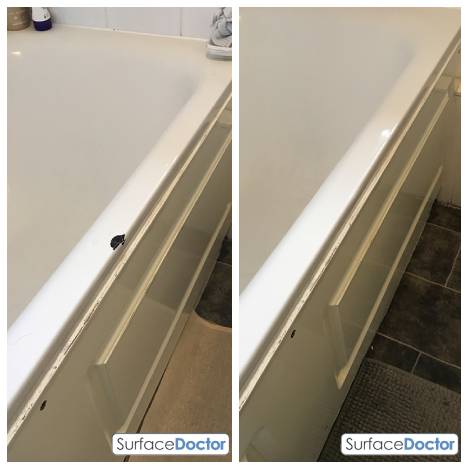
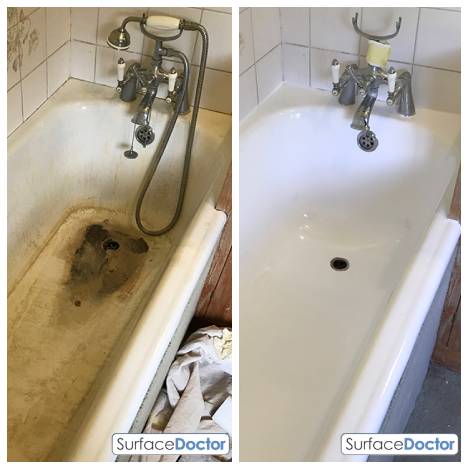
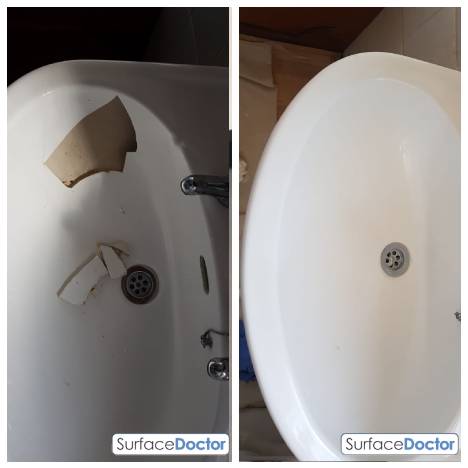
Free Ceramic Sink Assessment Anywhere in Bristol
From Clifton to Keynsham, Totterdown to Westbury-on-Trym — call Bath Repair Bristol now for your free, no-obligation ceramic sink repair quote across all BS postcodes.
Call Now0117 463 0962
Ceramic Sink Repair Bristol Services
Bath Repair Bristol repairs every type of ceramic sink found across Bristol kitchens and bathrooms. Each requires specific compounds, colour-matching and finishing techniques — there is no generic approach to professional ceramic repair.
Belfast Sink Repair Bristol — Fireclay Chip, Crack & Glaze Restoration
The Belfast sink has become the defining kitchen fixture in Bristol's renovated terraces. A deep, single-bowl fireclay sink with a built-in weir overflow, exposed front apron and characteristic rolled rim — installed as the centrepiece of open-plan kitchen-diners from Redland to Southville, Cotham to Totterdown. These sinks are beautiful, practical and increasingly expensive to buy. A quality Belfast sink costs £300-£800; the worktop cutout, plumbing and installation add £500-£1,500. Replacing one over a chip is wildly disproportionate.
Belfast Sink Damage We Repair Across Bristol
- Front Apron Chips: The most visible and most common damage. Cast iron pans, ceramic baking dishes, heavy mugs and wine bottles caught against the exposed front face during washing remove chips that show bright against the white glaze. In Bristol's hard water, exposed fireclay beneath the chip attracts limescale within days, turning a small white mark into a grey-brown stain
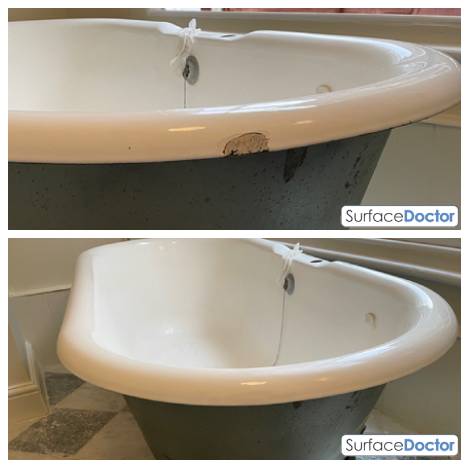
- Rolled Rim Damage: The characteristic rolled edge of a Belfast sink is vulnerable to impacts from above — dropped jars, bottles knocked from the draining board, kitchen taps swung into the rim during dishwashing. Chips along this prominent edge are conspicuous from across the room
- Base Cracks: Heavy items dropped into the deep bowl from height — cast iron casseroles, full glass bottles, ceramic mixing bowls — can crack the fireclay base. In Bristol's hillside properties where sink units sit on uneven floors, stress cracks along the base are compounded by the weight of water in a filled sink
- Limescale Crusting: Bristol's 228ppm water creates heavy mineral deposits around the weir overflow, along the waterline during soaking, and in concentric rings around the waste fitting. These deposits bond permanently to the glaze and cannot be removed with domestic products
Our Belfast sink repair uses fireclay-specific compounds colour-matched to your sink's particular white tone — from the warm cream of a traditional Shaws to the bright white of a modern RAK or Rangemaster. From £120.
Pedestal Basin Repair Bristol — Bathroom Ceramic Chip, Crack & Limescale Damage
Pedestal basins are the standard bathroom fitting across Bristol's enormous period housing stock. From original Edwardian basins in Clifton townhouses to 1930s ceramics in Horfield semis, from reproduction Victorian pieces in Totterdown renovation projects to contemporary designs in Harbourside apartments — the pedestal basin exists in every Bristol postcode and every era of the city's building history.
Pedestal Basin Damage Patterns in Bristol
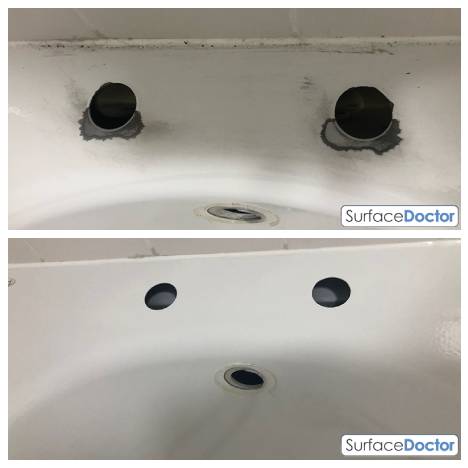
- Tap Area Limescale: The dominant Bristol basin problem. Hard water pools around tap bases, in the overflow channel and across the basin bowl wherever water stands or splashes. Over months and years, the mineral deposits build into crusts that chemically bond with the glaze, creating permanent roughness and discolouration that no amount of scrubbing can reverse. This is the single most common reason Bristol residents contact us about basin repair
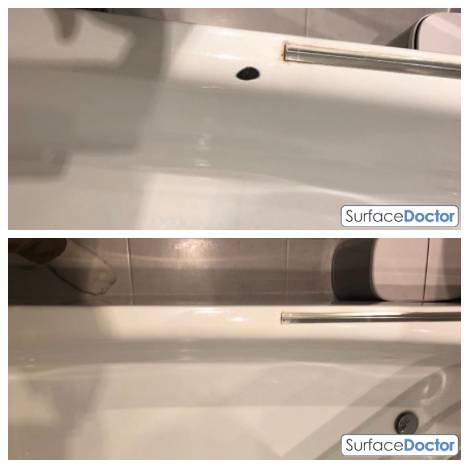
- Edge and Rim Chips: Dropped cosmetics bottles, electric toothbrush heads knocked against the rim, glass tumblers and perfume bottles all chip the basin edge. In bathrooms these chips are at eye level and immediately conspicuous
- Hairline Cracks: Thermal cycling from hot and cold water, structural settlement in older Bristol properties, and the cumulative stress of decades of use create fine cracks that may initially be cosmetic but can develop into leaks
- Crazing and Glaze Deterioration: The fine network of lines that appears on aged ceramic surfaces — particularly common on pre-war basins in Clifton, Redland and Cotham period properties where basins may be 80-120 years old
Pedestal basin repair preserves the original fixture in place — no plumbing disconnection, no wall damage, no tiling disruption. From £95.
Butler Sink & Farmhouse Sink Repair Bristol
Butler sinks — the shallower, flat-fronted cousin of the Belfast — and farmhouse-style apron sinks have found a natural home in Bristol's eclectic kitchen culture. Smaller than a Belfast but with the same exposed front face, butler sinks suit the compact kitchens of Bristol's terraces where a full-depth Belfast may overwhelm the worktop run. They feature prominently in the renovated cottages of Leigh Woods, the Edwardian terraces of Bishopston and the creative kitchen designs of Southville and Bedminster.
Butler and Farmhouse Sink Repairs
- Apron Face Chips: The flat front face of a butler sink is its signature feature — and its most vulnerable surface. Unlike the curved apron of a Belfast, the flat profile offers no deflection from impacts, making chips from heavy cookware more frequent and more prominent
- Undermount Stress Cracks: Many Bristol butler sinks are installed undermounted beneath stone or quartz worktops. The weight of the sink plus water, supported only at its rim, creates downward stress that can develop into hairline cracks along the mounting points over years of use
- Double Bowl Divider Damage: Double butler sinks feature a central divider that takes impacts from both sides during dishwashing. Chips along this narrow edge are common and conspicuous
- Period Reproduction Glaze Matching: Many Bristol installations use reproduction period sinks with specific glaze tones — not the pure white of modern sanitaryware but warmer cream, ivory or buttermilk tones that require precise colour matching
Butler and farmhouse sink repair from £130, with exact glaze-tone matching on site.
Hard Water Limescale Restoration — Bristol's Signature Ceramic Problem
This service exists because Bristol's water demands it. At 228 parts per million calcium carbonate, the city's Mendip-sourced supply creates ceramic damage patterns that simply do not occur in soft water cities. Bath Repair Bristol has developed a specific limescale restoration protocol for Bristol ceramics that goes far beyond what any domestic cleaning product or descaler can achieve.
What Bristol Hard Water Does to Ceramic Sinks
- Glaze Erosion: Limescale does not merely sit on the surface — it bonds chemically with the ceramic glaze, creating a permanent roughness that traps dirt, bacteria and further mineral deposits in a self-reinforcing cycle. Aggressive descaling products used in desperation often strip more glaze than scale, accelerating the deterioration
- Mineral Crust Formation: Around taps, overflows and waste fittings, calcium carbonate builds into visible grey-white crusts up to 3mm thick. These formations are rock-hard — they are, after all, limestone re-deposited — and resist all household removal methods
- Stain Penetration: Where limescale has roughened the glaze, tea, coffee, food dyes and cosmetics penetrate the surface far more deeply than they would on intact ceramic. The result is combined mineral and organic staining that conventional products cannot address
- Sealant Degradation: Silicone sealant around sink-to-worktop joints and sink-to-wall junctions degrades faster in hard water. The mineral deposits lift the silicone edge, creating gaps where water penetrates — a particular concern in Bristol's period properties where water damage to timber structures is costly
Our Bristol hard water restoration includes professional-grade descaling, glaze reconditioning, protective sealing and aftercare guidance specific to Mendip limestone water. From £130.
Our Ceramic Sink Repair Process — Adapted for Bristol's Hard Water Environment
Every ceramic sink repair in Bristol follows our proven six-stage process, specifically adapted for the challenges of the city's limestone-sourced water supply:
- 1. Assessment: We inspect the full ceramic surface under strong light, identifying every chip, crack, scratch and area of limescale damage. In Bristol properties, we specifically check for hard water erosion around taps and overflows that the homeowner may not have noticed — early treatment prevents further glaze deterioration
- 2. Protection: Surrounding worktops, splashbacks, taps and any adjacent surfaces are masked and protected
- 3. Limescale Treatment: Bristol-specific step. Professional-grade descaling compounds are applied to all mineral deposits, dissolving calcium carbonate without damaging the underlying ceramic. This treatment is stronger and more precisely targeted than any retail product
- 4. Surface Preparation: Damaged areas are cleaned, dried and prepared for compound application. For chips, loose material is removed and the area is profiled for optimal adhesion. For cracks, the fracture is cleaned and assessed for structural depth
- 5. Repair & Colour Match: Specialist ceramic repair compound is mixed on site, colour-matched to your sink's exact white tone — from warm heritage cream to bright modern white. Applied in thin layers, shaped to match the original sink profile, and cured under controlled conditions
- 6. Finishing & Protection: The repair is polished to match the surrounding glaze sheen, and a protective sealant is applied to resist future limescale adhesion — extending the interval between the mineral deposits that Bristol's water makes inevitable
Total time on site: 1-4 hours depending on the extent of damage. The repaired sink is ready for light use after 8 hours and full use within 24 hours.
Expert Ceramic Sink Repair on Every Fixture Across Bristol
Professional restoration for Belfast sinks, pedestal basins, butler sinks and every ceramic surface.
Get Your Free QuoteCeramic Sink Repair for Bristol's Properties
From original Georgian pedestal basins in Clifton listed buildings to chipped Belfast sinks in Southville renovation projects, from limescale-damaged ceramics in Totterdown hillside terraces to developer snagging in Temple Quarter apartments — we repair every ceramic sink in every Bristol property.
Ceramic Sink Repair in Bristol's Listed Buildings & Conservation Areas
The Preservation Advantage
Bristol has over 4,000 listed buildings and 33 conservation areas. In Clifton alone, hundreds of Grade I and Grade II listed Georgian and Regency townhouses contain original or early reproduction ceramic sanitaryware that is considered part of the building's heritage fabric. Removing and replacing these fittings requires listed building consent, risks damage to surrounding historic plasterwork and tiling, and may result in the permanent loss of an irreplaceable original piece. Our in-situ ceramic repair preserves the fitting in place, with no consents required and no disturbance to the surrounding building fabric.
Heritage Colour Matching
Period ceramics are not modern white. Georgian basins range from deep cream to warm ivory; Victorian fireclay has a distinctive warm undertone; Edwardian sanitaryware carries its own specific palette. Our on-site colour matching captures the exact tone of your ceramic piece — not an approximation, but a precise match that maintains the coherent period aesthetic of a carefully restored Bristol interior.
Landlord, Rental & Commercial Ceramic Sink Repair Bristol
Rental Property Sinks
Bristol's two universities — the University of Bristol and UWE — bring tens of thousands of students. Student HMOs across Redland, Cotham, Stokes Croft and Fishponds accumulate ceramic damage every academic year. Professional lets across Clifton, Harbourside and Southville need pristine fixtures. The growing build-to-rent sector around Temple Quarter and the Enterprise Zone demands efficient maintenance. Portfolio rates for landlords managing multiple Bristol properties.
Restaurants, Hotels & Holiday Lets
Bristol's thriving independent restaurant scene, boutique hotel sector and Airbnb market all depend on immaculate washroom ceramics. A chipped basin in a restaurant cloakroom damages the dining experience. A stained sink in an Airbnb triggers negative reviews. We provide rapid, discreet ceramic repair for hospitality businesses across the city — often completed before opening or between guest changeovers.
Pre-Sale Preparation
A chipped Belfast sink is one of the first things Bristol buyers notice. In a city where renovated terrace kitchens with statement sinks can add £15,000-£30,000 to property value, a £120 chip repair protects substantial investment and removes a negotiation lever from savvy Bristol house buyers.
New-Build & Developer Snagging
Ceramic sinks and basins arrive on site with factory defects, collect chips during installation and suffer damage from other trades working around them. We provide efficient snagging repair across Bristol's active development zones — Temple Quarter, Wapping Wharf, Bedminster Green, Filton Airfield and the south Bristol regeneration corridor.
Ceramic Sink Repair Bristol — Case Study: Redland Victorian Terrace, BS6
The Property: A four-bedroom Victorian terrace on Cranbrook Road in Redland, extensively renovated eighteen months earlier with a rear extension creating a large kitchen-diner. The kitchen featured a Shaws Classic 800 Belfast sink — a premium fireclay piece in the classic warm-white Shaws tone — undermounted into a Silestone Calacatta Gold quartz worktop. The sink was the focal point of the kitchen design. Total sink and installation investment: approximately £1,400.
The Problem: Three issues had accumulated since the kitchen was completed. First, a deep chip on the front apron — a Le Creuset cast iron skillet had caught the exposed face during washing, removing a chip approximately 3cm across that exposed the brown fireclay body beneath the white glaze. Bristol's hard water had already deposited a grey-brown limescale crust inside the chip within weeks, making it far more conspicuous than the original white mark. Second, limescale buildup around the weir overflow had created a visible mineral ridge that household descalers could not shift despite weekly applications. Third, a cluster of fine scratches across the sink base from a heavy ceramic mortar used daily for fresh pesto — a distinctive Bristol cooking habit that puts unique demands on kitchen ceramics. The sink supplier quoted £650 for a replacement sink plus £400 for fitting — requiring disconnection of the undermount, removal of the quartz cutout section, and two days without a kitchen sink.
Our Solution: Our team attended on a Thursday morning. The front apron chip was first treated with professional descaling compound to remove the embedded limescale, then the exposed fireclay was sealed to prevent further mineral penetration. The chip was rebuilt using fireclay-matched compound in the precise warm-white Shaws tone, shaped to the original rolled-edge profile and polished to match the factory glaze. The weir overflow limescale was removed with targeted professional-grade treatment that dissolved the calcium deposits without affecting the ceramic surface. The base scratches were carefully abraded and re-polished through progressive grits to restore the original smooth finish. Finally, a protective ceramic sealant was applied across the entire sink to resist future limescale adhesion — extending the interval between Bristol's inevitable hard water deposits.
The Result: Total cost: £195. Total time on site: 2.5 hours. Sink ready for full use the following morning. The homeowners saved £855 versus the supplier's replacement quote, avoided two days without a kitchen sink, kept the original Shaws Belfast that their kitchen was designed around, and gained a protective coating against future hard water damage. The front apron repair is invisible — dinner party guests are challenged to find it and cannot.
Professional Ceramic Sink Repair Throughout Bristol
Book your free assessment today — Belfast sinks, pedestal basins, butler sinks and every ceramic fixture across all BS postcodes.
Get Your QuoteCeramic Sink Repair Bristol — Frequently Asked Questions
Everything you need to know about professional ceramic sink repair across Bristol:
Ceramic sink repair in Bristol starts from £95 for a single chip on a pedestal basin. Belfast sink chip repair from £120, butler sink repair from £130, crack repairs from £150, limescale restoration from £130, and complete resurfacing from £220. All quotes are free with no call-out charges across all BS postcodes.
Yes — Belfast sink chip repair is our most requested ceramic service in Bristol. We rebuild the damage using fireclay-matched compounds colour-matched to your sink's exact white tone, shaped to the original profile and polished to blend with the surrounding glaze. The repair is invisible and far more cost-effective than replacing the entire sink, which typically requires disconnecting plumbing and disturbing worktops.
Yes. Our professional-grade descaling treatment removes mineral deposits that household products cannot shift — including the heavy calcium carbonate crusts that Bristol's 228ppm Mendip Hills water creates around taps, overflows and waste fittings. We also apply protective sealant to slow future limescale buildup.
Yes — in-situ repair is often the ideal solution for listed and conservation area properties. We restore the existing ceramic fitting without removing it, requiring no listed building consent and causing no disturbance to surrounding historic plasterwork, tiling or fabric. This is particularly valued in Clifton, Hotwells and the wider Bristol conservation zones where original fittings contribute to the building's heritage character.
Most Bristol ceramic sink repairs take 1-3 hours. A single chip under an hour, multiple chips 1-2 hours, crack repairs 2-3 hours, full resurfacing 3-4 hours. Limescale restoration adds approximately 30-60 minutes. The repaired surface is ready for light use after 8 hours and full use within 24 hours.
We cover every BS postcode including Clifton (BS8), Redland & Cotham (BS6), Southville & Bedminster (BS3), Totterdown & Knowle (BS4), Bishopston (BS7), Westbury-on-Trym (BS9), Henleaze (BS10), Harbourside (BS1), Easton (BS5), Fishponds (BS16), plus Keynsham (BS31), Bradley Stoke (BS32), Portishead (BS20), Clevedon (BS21), Nailsea (BS48) and all surrounding areas.
What Bristol Customers Say About Our Ceramic Sink Repair Service
Real feedback from homeowners and landlords across Bristol:
Sarah L
Belfast Sink Chip Repair — Southville, BS3"Our Belfast sink in our Southville terrace had a nasty chip right on the front apron where everyone could see it. The whole kitchen is designed around this sink — it was the most expensive single item in the renovation — so replacing it would have meant ripping out worktops and tiles on either side. The team matched the white perfectly and the repair is completely invisible. Even knowing where the chip was, I cannot find it. Saved us a fortune and a week of disruption. Best money we have spent on the house."
Tom R
Pedestal Basin Limescale Restoration — Clifton, BS8"Hard water limescale had absolutely ruined the finish on the original pedestal basin in our Clifton flat. It was rough, permanently stained around the taps and overflow, and looked dreadful no matter how much we scrubbed. The basin is original to the building and we did not want to replace it. Bath Repair Bristol removed all the mineral buildup, restored the glaze to a beautiful smooth finish and applied a protective coating. It looks like the day it was installed. Really impressed with this ceramic sink repair Bristol service — they understand the challenges of Bristol's hard water."
Get Your Free Ceramic Sink Repair Bristol Quote Today
Contact Bath Repair Bristol now for professional ceramic sink repair anywhere in Bristol. Free assessments, transparent pricing, no call-out charges, and guaranteed results on every ceramic fixture across every BS postcode.
Or complete our Ceramic Sink Repair Bristol Quote Form below:
FREE Ceramic Sink Repair Quote — Bristol
Ceramic Sink Repair Bristol — Full Service Coverage Map
Professional Ceramic Sink Repair Across Every Bristol Neighbourhood
Bath Repair Bristol provides expert ceramic sink repair services throughout Bristol covering all BS postcodes: City Centre & Harbourside (BS1-BS2), Southville & Bedminster (BS3), Totterdown & Knowle (BS4), Easton & St George (BS5), Redland & Cotham (BS6), Bishopston & Horfield (BS7), Clifton & Hotwells (BS8), Westbury-on-Trym (BS9), Henleaze (BS10), Fishponds & Downend (BS15-BS16), Portishead (BS20), Clevedon (BS21), Keynsham (BS31), Bradley Stoke (BS32), Nailsea (BS48) and all surrounding areas.
Contact us on 0117 463 0962 to confirm coverage for your specific Bristol location.